First and foremost a farm product
According to the European Union's definition, extra virgin olive oil is a "superior category olive oil obtained directly from olives and solely by mechanical means". It is therefore a farm product (from olive growing) combined with primary industrial processing (separating the oil by mechanical means at the mill). Farming is by far the larger part, accounting for more than 75% of the value of the finished product.
Olive growing: a balance to be struck
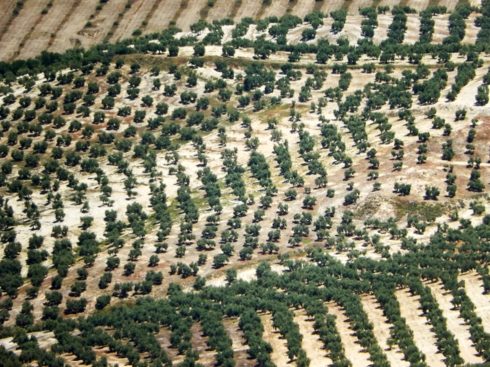
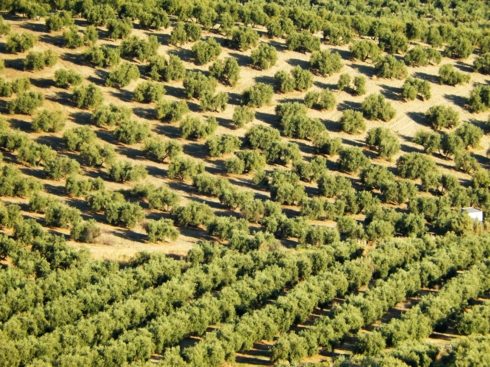
Olive growing is more than 6000 years old. Olive varieties have evolved naturally or through selection and grafting. Some growers leave their groves practically wild, with no intervention. Others have adopted the most modern techniques and mechanised to the extreme: in some super-intensive orchards, no one even touches the trees or the fruit directly any more. Yields can range from 200 kg to 3500 kg of olive oil per hectare, a ratio of 1 to 18.
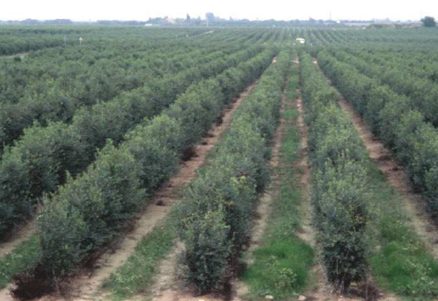
There is therefore a wide range of farming methods, which have a considerable impact on the quality and production cost of the final product.
Neglected olive trees do not produce the best oils, and their very low yields and difficult harvesting, done entirely by hand, also make their production costs prohibitive. Oils from such "farms" are generally kept for personal or family use. At the other extreme, oils from super-intensive orchards are not the best either, but their production costs are among the most competitive.
In some producing areas, irrigation is essential to ensure a minimum harvest. The olive tree is very hardy: in a severe drought it draws the water and nutrients it needs to survive from its leaves and fruit. Carefully managed irrigation allows it to produce fruit without compromising its quality, and therefore the sensory qualities of the oil.
A mechanical shaker placed on the trunk or main branches, finished off with a rake to bring down the last olives, is the best harvesting method, because it does the least damage to the fruit and the trees. In contrast, the traditional practice of beating the branches with long wooden poles breaks small branches, bruises the tree and marks the fruit, which speeds up oxidation and harms the quality of the oil.
Olive growing is a form of "culture": human work, deliberate and repeated action to shape and guide nature so that it yields the best possible product. The grower must constantly strike a delicate balance between doing too much and doing too little. The ideal is a well-tended tree that produces plenty of well-proportioned fruit, rich in the minor components that give the oil its full flavour. A neglected tree, poorly fed and watered, untreated against diseases and insects, with an uncleared base and unpruned branches, will never produce excellent oils. Nor will an over-exploited tree, gorged with water and fertiliser and without room to grow.
A Provençal proverb sums up this relationship between people and the olive tree perfectly: "Whoever ploughs his olive trees begs them for fruit; whoever manures them asks for it; whoever prunes them demands it."

The mill: ancient principles, modern tools
Oil extraction techniques date back to antiquity. The basic principle has not changed, despite the many innovations in equipment over the centuries. It comes down to two steps: crushing the olives (preparing the paste) and extracting the oil (separating the oily fraction from the other solid and liquid components).
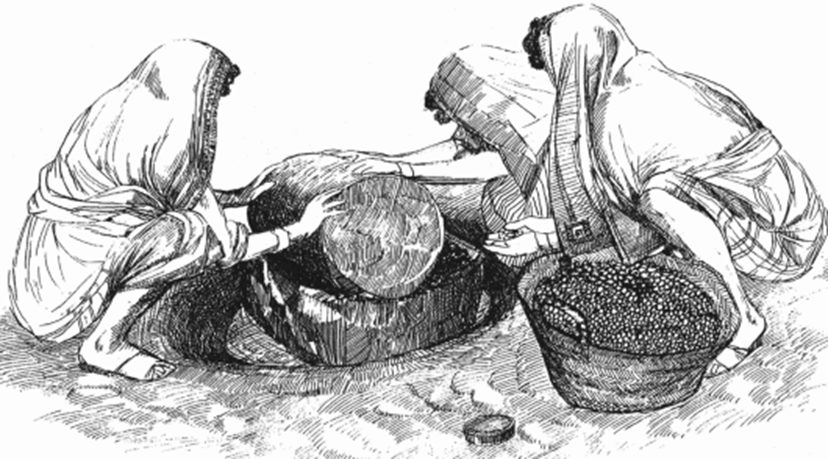
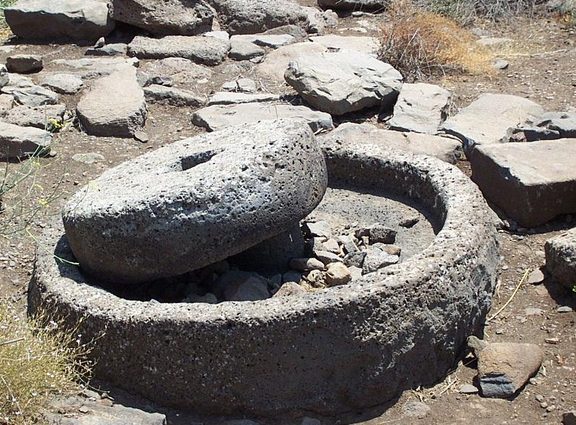
Originally, olives were left in the sun for about ten days to lose as much water as possible. They were then crushed by hand with a large stone on a slightly hollowed flat rock to make a paste. The oil was extracted by placing this paste in a strong cloth that was twisted using sticks passed through wooden boards.
This technique was soon improved to mechanise both steps. Conical or wheel-shaped millstones replaced the hand stone and were gradually driven by draught animals, then by machines. The twisting press was replaced by the hydraulic press with fibre mats.
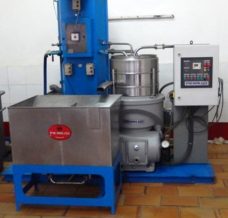
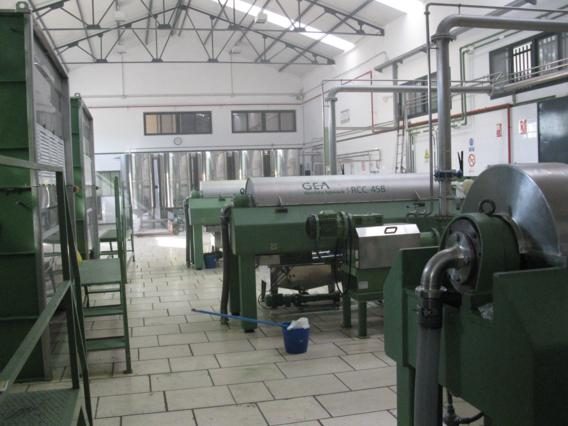
But the great technological revolution came only in the mid-20th century, with electric crushers, centrifuges and the continuous-line principle, which allows the whole process to run without interruption. Above all, these technologies greatly reduced crushing and extraction times, as well as bacterial contamination and the exposure of the paste and oil to air. The quality of the oil produced improved considerably as a result.
Some mills still use millstones and mat presses, built into a continuous process. They can produce excellent extra virgin oils, provided they maintain rigorous cleanliness and hygiene and work quickly to limit the paste's and oil's exposure to air.